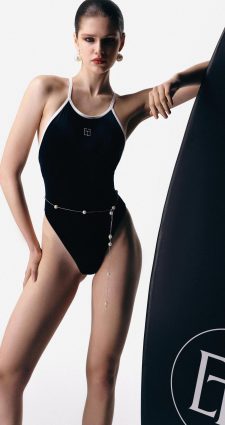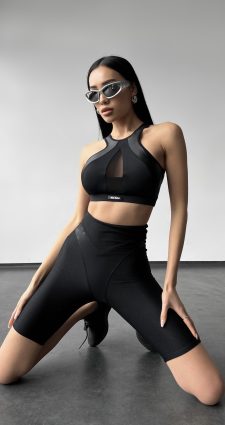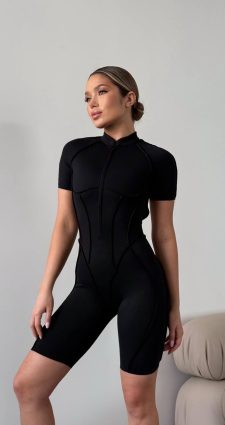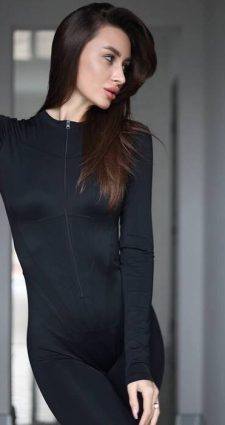


Until recently, rash guards were firmly associated with surfing and martial arts. Now, women’s models with UV protection are worn on the beach, in the gym, on treadmills and simply on walks by the water. The range is so wide that without understanding the key features, it’s easy to make the wrong choice. One model is designed for contact with salt water, another for dry training, and a third for everyday wear. Let’s take a look at which factors to consider and how to choose the right garment for specific purposes.
What is a rash guard for?
A rash guard is a close-fitting T-shirt made from synthetic stretch fabric with a high degree of elasticity. Originally, these garments were created for surfers: they protected the skin from UV rays, salt water and chafing against the board. Over time, they made their way into martial arts, and from there into fitness and beachwear. High-quality models offer UPF 50+ protection and block up to 98% of harmful UV rays.
Important: UPF (Ultraviolet Protection Factor) is a measure of a fabric’s ability to protect against UV rays. A rating of 50+ is considered the maximum: less than 2% of radiation penetrates the material. For the beach, a run or a water workout in direct sunlight, choose this level.
In addition to UV protection, the thick, stretchy fabric provides a gentle compression effect: it supports the muscles, reduces vibration and speeds up recovery. That is why rash guards are chosen not only for water sports, but also for CrossFit, yoga and strength training.
Selection criteria
Before buying, decide where and how you plan to use the rash guard. Beach models and gear for contact sports differ in cut, fabric density and seam construction. A mistake at this stage can be costly: the wrong choice will quickly stretch out or start to chafe. Pay attention to the following factors:
- Intended use. For water sports, flat seams are required – they won’t chafe wet skin. For indoor use, models with mesh inserts that improve ventilation are suitable.
- Size and fit. A rashguard should fit snugly but not be too tight. If the fabric gathers in folds, the garment is too big; if it restricts movement, it is too small.
- Sleeve length. Long sleeves offer better protection from the sun and minor injuries. Short sleeves are more comfortable in hot weather and for indoor activities.
- UPF rating. For active outdoor pursuits – no lower than 30, ideally 50+.
Check the quality of the seams separately – with intensive use, these are the first to give way. Double stitching or taped seams significantly extend the garment’s lifespan. Cutting corners here means you’ll need to replace the item after just a couple of months.
Fabrics and technologies
Most models are made from a blend of polyester (80-85%) and elastane (15-20%). Polyester provides strength and quick-drying properties, whilst elastane ensures stretch and a snug fit. Models with added nylon are softer to the touch and more comfortable for prolonged wear, which is why they are more often chosen for everyday use.
Note: Antibacterial treatments (silver ions, copper) help the fabric stay fresh for longer. The effect lasts for 50 or more washes – enough to last one or two active seasons.
Moisture-wicking technology is essential for training. Without it, sweat gets trapped between the skin and the fabric, causing discomfort and creating a breeding ground for bacteria. Manufacturers usually specify this feature on the label – look for references to quick-drying and moisture-wicking properties.
Current trends
Rash guards have long been a staple of beach fashion, and every season designers experiment with colour palettes, prints and silhouettes. Styles from the latest collections differ markedly from the classic black and dark blue options. Among the popular trends:
- Tropical prints – palm leaves, floral motifs, abstract floral designs.
- Colour blocking – contrasting combinations of two or three colours with clean, geometric lines.
- Deep solid colours – burgundy, emerald, indigo as an alternative to the usual black.
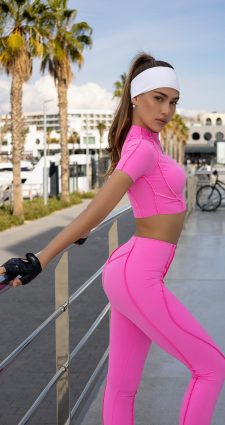
- Cropped rash guards – cropped styles that reveal the waist, for the beach and the gym.
- Neon accents – bright inserts and details inspired by 1980s style.
If you’re torn between a trendy print and a classic solid colour, go for the neutral option. It blends more easily with the rest of your wardrobe and won’t go out of fashion after a season.
What to wear with a rash guard
A women’s rash guard is a versatile piece, and the notion that it’s ‘just for the beach’ has long since faded. It’s worn at the gym, on morning runs and even on city walks in hot weather. Here are some tried-and-tested combinations that work in different situations:
- with a two-piece swimsuit or high-waisted swim shorts;
- with board shorts or surf shorts;
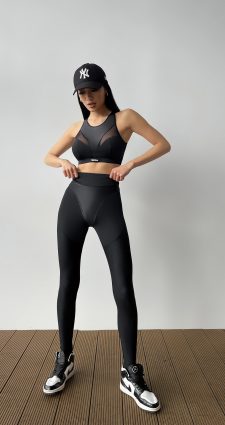
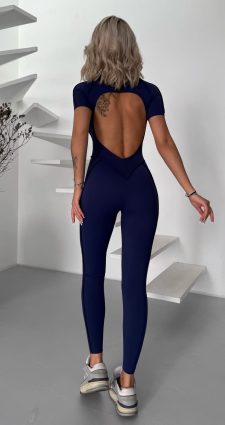
- with leggings and sports tights;
- with denim shorts for walks by the water;
- with a skort for beach volleyball.
The principle is simple: a bright top with a plain bottom, and vice versa. A printed top looks best paired with a plain bottom in a neutral shade, whilst a simple top leaves room to experiment with colour.
The key to making the right choice is to have a clear understanding of what you need it for. The beach, the gym and open water all have different requirements in terms of cut, fabric and level of protection. Decide on the intended use, choose the right size, check the quality of the seams – and your purchase will last for more than one season, evolving from sportswear into a proper part of your wardrobe.